
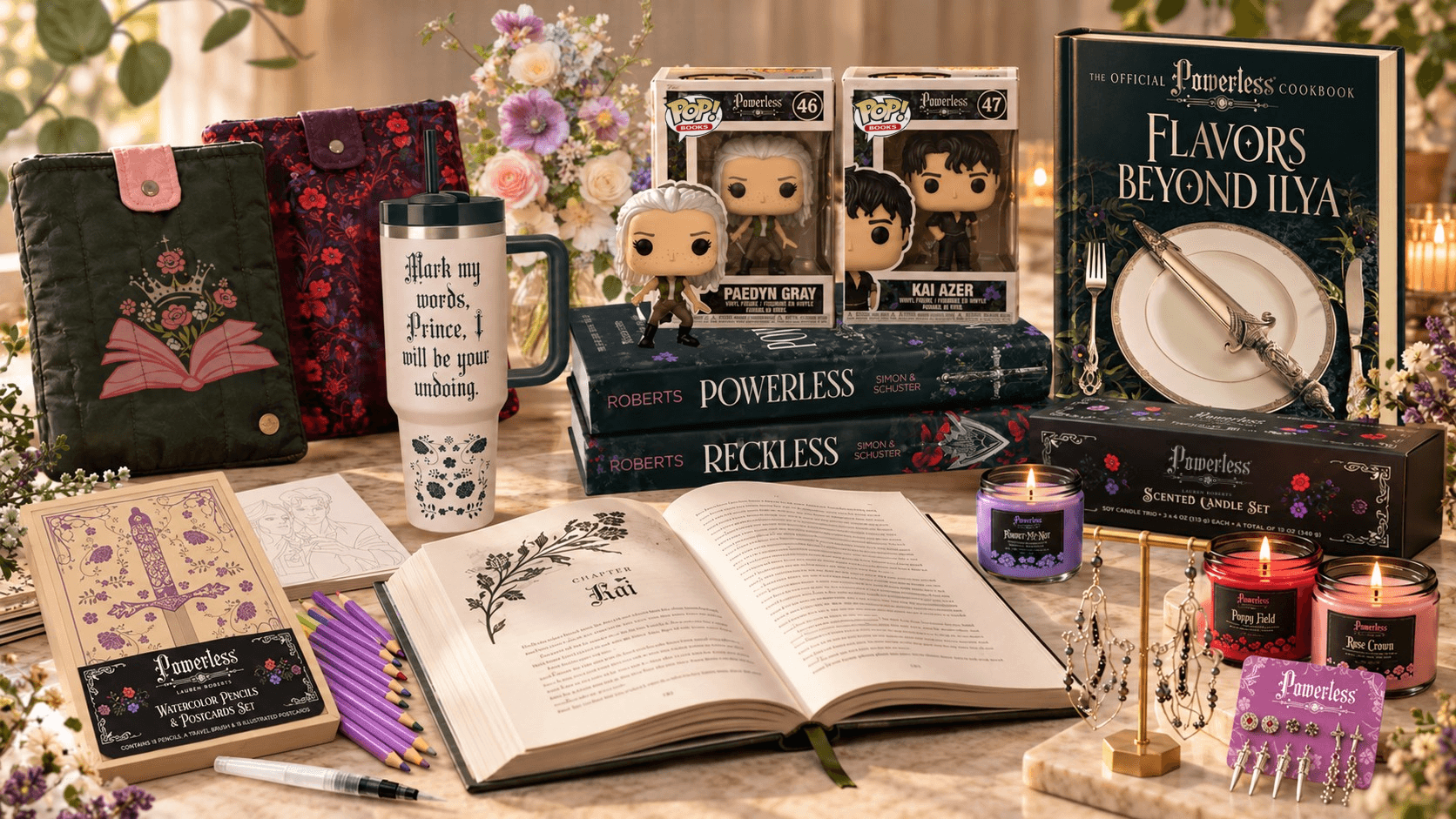
Publishing has become one of the most powerful incubators of lifestyle brands.
Books do something few other forms of entertainment can: they create intensely personal relationships between audiences, characters and stories. Readers don’t simply consume a book. They spend hours inside its world, imagine the characters for themselves, talk about them, recommend them, revisit them and increasingly find communities of other people who feel exactly the same way.
For decades, the traditional path to building a major consumer brand was fairly predictable: create a hit television show or movie, build an audience, and then extend that popularity into merchandise.
That model has changed.
Today, a book can build the audience first. It can create the fandom, the community and the emotional connection long before, and sometimes without, a major screen adaptation. And when that connection is strong enough, the book can become the foundation for something much larger: a lifestyle brand.
Nowhere is that more apparent than in the extraordinary growth of romance and romantasy.
From Readers to Fandoms
Romance readers have always been passionate, but BookTok and social media have transformed that passion into highly visible, highly engaged communities. Readers don’t simply finish a book and move on. They talk about the characters, debate relationships, share favorite moments, create fan art, dress as characters, attend events and identify themselves as members of a fandom.
For the right property, that creates an enormous opportunity beyond the book itself.
At Moxie, we’ve seen this firsthand through our representation of two of today’s major authors in the romance and romantasy space: Lauren Roberts, author of the Powerless series, and Navessa Allen, author of the Into Darkness series.
Their audiences don’t just want another book. They want ways to participate in the worlds and communities those books have created. Fashion, jewelry, beauty, collectibles, games, experiences and other products can become another form of storytelling, and another way for fans to express their connection to a property.
That distinction is important. Successful licensing isn’t about putting a book cover on a T-shirt. It’s about understanding what readers love about the property and translating that emotional connection into products they genuinely want in their lives.
But This Isn’t Just a Romantasy Story
The same phenomenon can be seen in a very different kind of publishing property: The Baby-Sitters Club.
Millions of women grew up with Kristy, Claudia, Stacey, Mary Anne and the rest of the club. Today, many of their daughters are discovering those same characters through graphic novels, books and screen entertainment.
That creates something particularly powerful from a licensing perspective: a brand shared across generations.
A mother may remember Claudia’s bedroom, Stacey’s style or the original book covers. Her daughter may know the characters through an entirely different format. They aren’t necessarily experiencing The Baby-Sitters Club in the same way, but they share an emotional connection to the same world.
That opens the door to something much bigger than traditional children’s merchandise. Fashion, accessories, stationery, beauty, room décor, travel products and gifts can all become authentic extensions of the brand when they’re developed for the consumers who actually love it.
Even the Youngest Readers Build Lasting Relationships
The principle applies at the preschool level as well.
Chicka Chicka Boom Boom has been part of childhood for generations. Parents who remember the book from their own childhood now read it to their children. Its distinctive artwork, rhythm, characters and unmistakable visual identity have become part of the emotional memory surrounding the book.
That is an extraordinarily powerful foundation for a consumer brand.
The opportunity isn’t created simply by the number of books sold. It comes from recognition, affection and the desire to carry a little piece of that experience into other parts of life.
Books Have Something Other Media Can’t Replicate
There is a reason publishing properties can be particularly powerful in licensing.
Reading is intimate.
A reader spends hours inside a story, imagining its world rather than simply watching it unfold. Characters become personal. Favorite books become part of particular moments in people’s lives, childhood, adolescence, falling in love, becoming a parent.
That emotional ownership is difficult to manufacture.
It also helps explain why we’re seeing such extraordinary energy around publishing-based fandoms today. Social media has given readers a place to find one another, and licensing gives them a way to take that connection into the physical world.
The result is a fundamental shift in how we should think about publishing IP.
A bestseller doesn’t automatically become a lifestyle brand. The extension has to be authentic. The audience has to be understood. The products have to make sense. And protecting the integrity of the original property remains essential.
But when all of those pieces come together, the possibilities are enormous.
From the explosive world of romantasy to a multigenerational phenomenon like The Baby-Sitters Club to an enduring children’s classic like Chicka Chicka Boom Boom, we’re seeing the same idea expressed in very different ways.
The book may be where the relationship begins. It doesn’t have to be where it ends. At Moxie & Company, we believe some of the most exciting lifestyle brands of the next decade may already be sitting on someone’s bookshelf.